For US Healthcare Professionals
For US HCPs
Prescribing Information
IMAAVY® (nipocalimab-aahu)
Patient Enrollment Form

About wAIHA

wAIHA is an autoantibody-driven disease1
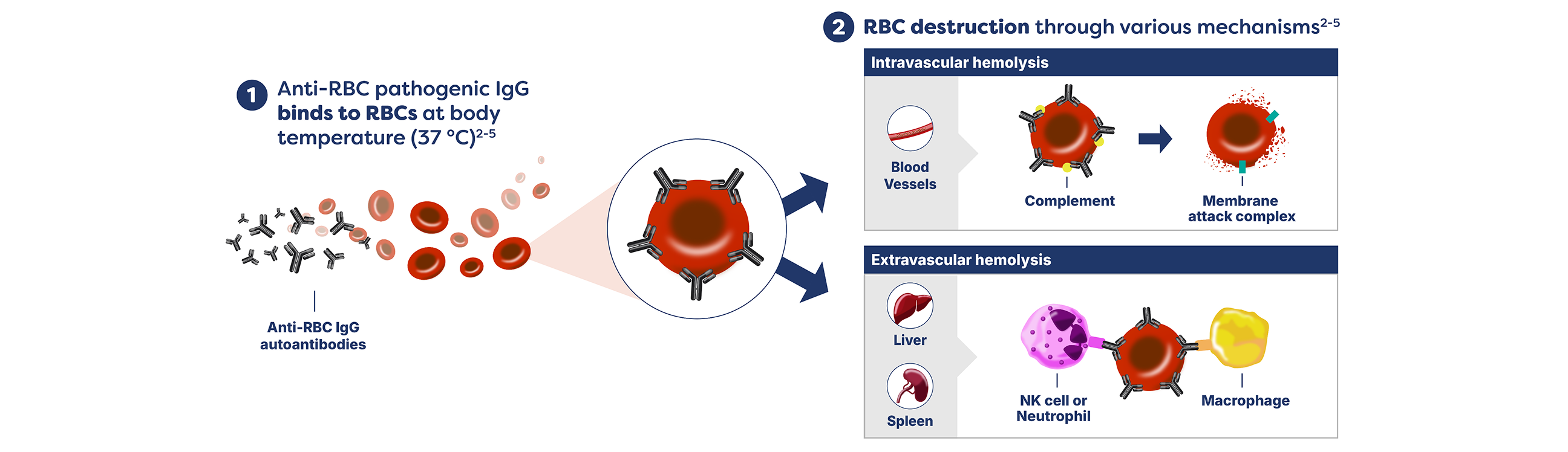
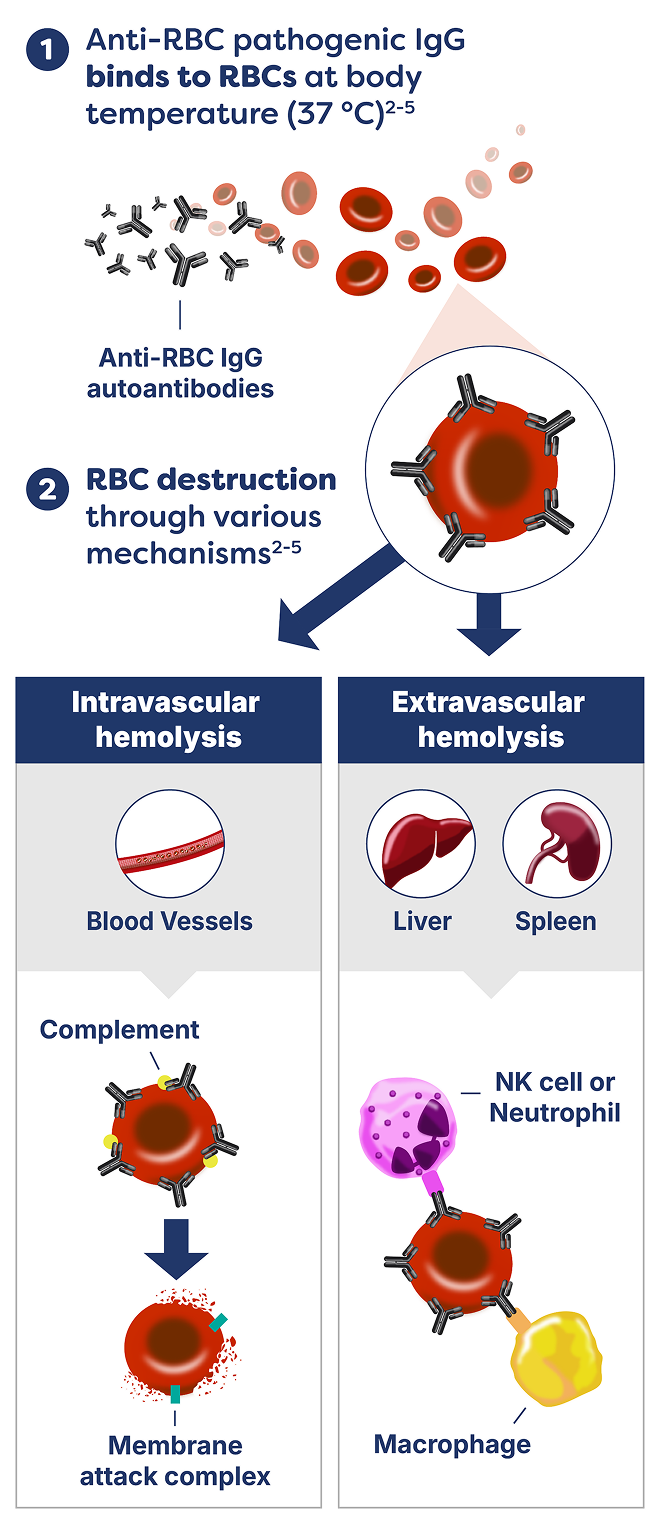
1. Anti-RBC pathogenic IgG binds to RBCs at body temperature (37° C). 2. RBC destruction through various mechanisms.
B cells

B cells are responsible for generating antibody responses to pathogens. Sometimes B cells also create autoantibodies. In wAIHA, there are autoantibodies that destroy red blood cells (RBCs).1,5

Pathophysiology of wAIHA 

wAIHA is the most common form of autoimmune hemolytic anemia, driven by the abnormal production of IgG autoantibodies that bind to RBCs.1,4

RBC destruction

The IgG-coated RBCs primarily undergo extravascular hemolysis, resulting in RBC destruction predominately in the spleen. The resulting anemia can be severe and sometimes life-threatening.1

IgG=immunoglobulin G; NK=natural killer; wAIHA=warm autoimmune hemolytic anemia.

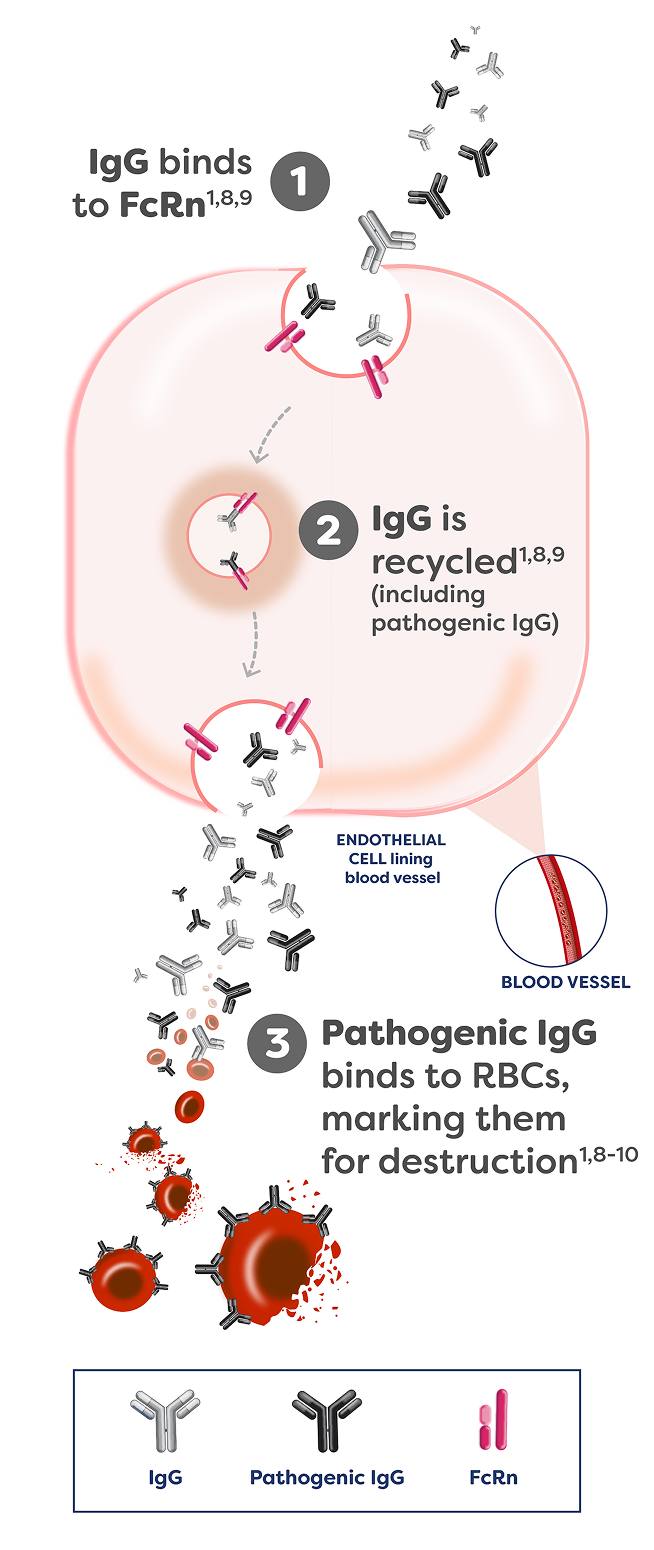
FcRn binds to both normal and pathogenic IgG within endosomes and protects IgG from lysosomal degradation by recycling it back to the cell surface and circulation, thereby extending the serum half-life of IgG.6,7
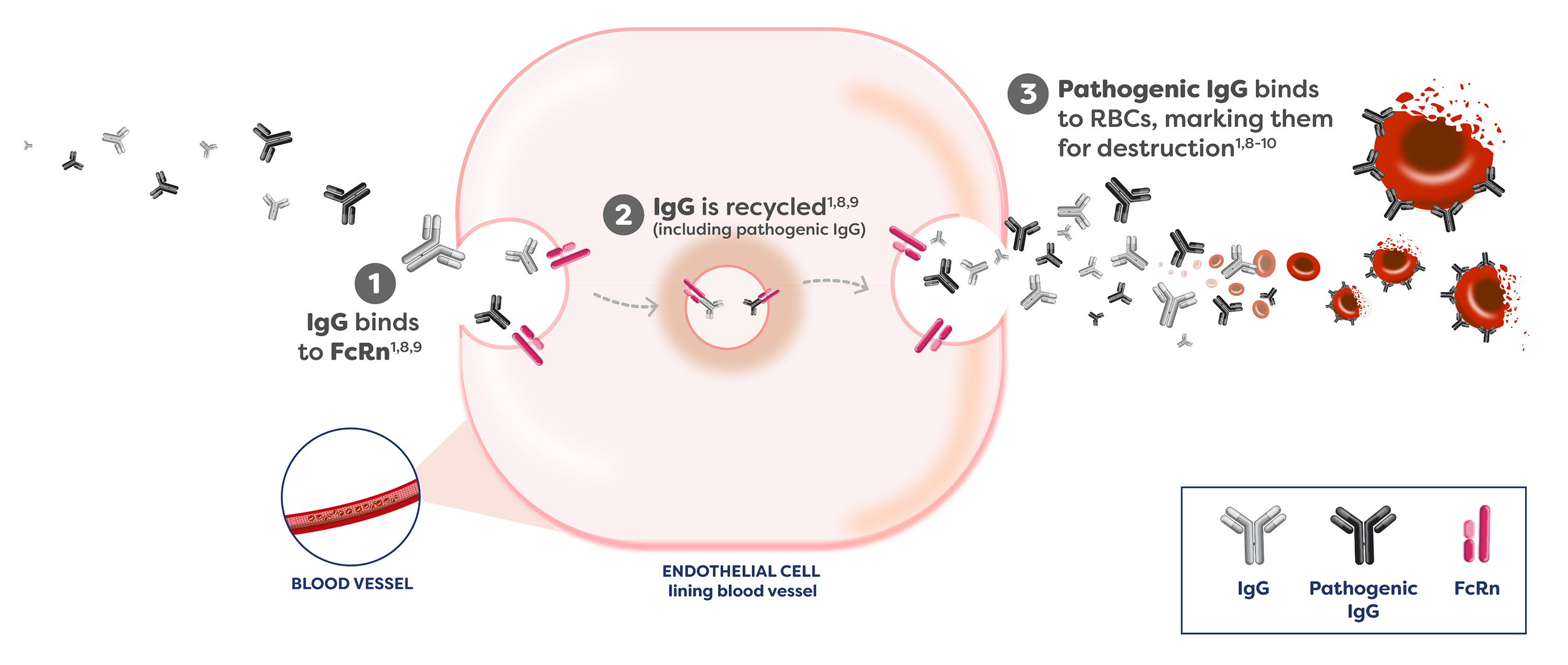
1. IgG binds to FcRn. 2. IgG is recycled (including pathogenic IgG). 3. Pathogenic IgG binds to RBCs, marking them for destruction.

FcRn=neonatal fragment crystallizable receptor; IgG=immunoglobulin G; RBC=red blood cell.

Fatigue is recognized as one of the major symptoms of wAIHA, impacting many living with the disease11
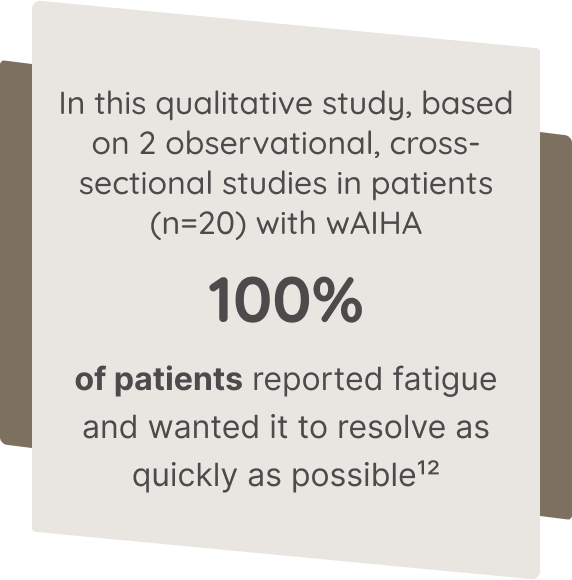
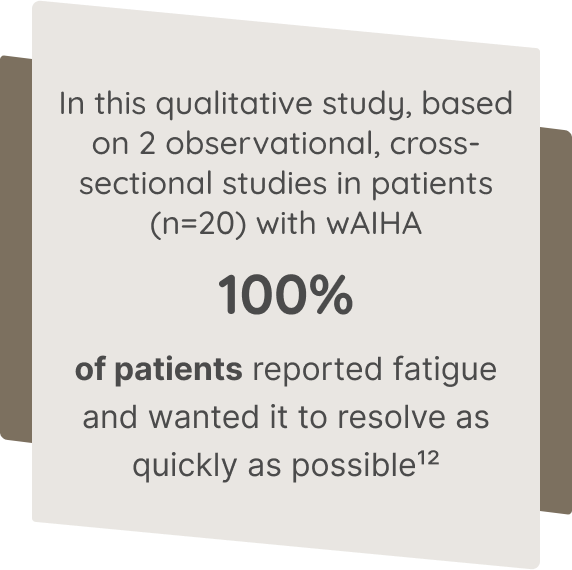
In this qualitative study, based on 2 observational, cross-sectional studies in patients (n=20) with wAIHA 100% of patients reported fatigue and wanted it to resolve as quickly as possible
  • In the same study, fatigue was often described as the most bothersome and debilitating symptom (eg, "devastating," "exhausting")12
  • Patients also said that even a 1-point change in fatigue severity (on the FACIT-Fatigue scale) would be meaningful12

Key limitations of the study included small US-based sample size, limited diversity, fatigue-focused participant selection and interviews, retrospective recall among some patients, and a qualitative assessment of meaningful change.

wAIHA=warm autoimmune hemolytic anemia; FACIT=Functional Assessment of Chronic Illness Therapy.

IMAAVY® (nipocalimab-aahu) Transparent Logo

Once you’ve made the decision to prescribe IMAAVY

Sign your patients up for support to help begin their IMAAVY journey

Enroll your patients today
IMAAVY® (nipocalimab-aahu) Transparent Logo
Contact your local representative
Patient enrollment form

References: 1. Fattizzo B, Ling LE, Barcellini W. Targeting the neonatal Fc receptor (FcRn) in hematologic conditions with a focus on warm autoimmune hemolytic anemia. Blood Rev. 2025;74:101328. doi:10.1016/j.blre.2025.101328 2. Brodsky RA. Warm autoimmune hemolytic anemia. N Engl J Med. 2019;381(7):647-654. doi:10.1056/NEJMcp1900554 3. Costa A, Mulas O, Mereu AM, Schintu M, Greco M, Caocci G. Beneath the surface in autoimmune hemolytic anemia: pathogenetic networks, therapeutic advancements and open questions. Front Immunol. 2025;16:1624667. doi:10.3389/fimmu.2025.1624667 4. Kuter DJ. Warm autoimmune hemolytic anemia and the best treatment strategies. Hematology Am Soc Hematol Educ Program. 2022;2022(1):105-113. doi:10.1182/hematology.2022000405 5. Fattizzo B, Barcellini W. Autoimmune hemolytic anemia: causes and consequences. Expert Rev Clin Immunol. 2022;18(7):731-745. doi:10.1080/1744666X.2022.2089115 6. Pyzik M, Sand KMK, Hubbard JJ, Andersen JT, Sandlie I, Blumberg RS. The neonatal Fc receptor (FcRn): a misnomer? Front Immunol. 2019;10:1540. doi:10.3389/fimmu.2019.01540 7. Seth NP, Xu R, DuPrie M, et al. Nipocalimab, an immunoselective FcRn blocker that lowers IgG and has unique molecular properties. MAbs. 2025;17(1):1-22. doi:10.1080/19420862.2025.2461191 8. Blumberg LJ, Humphries JE, Jones SD, et al. Blocking FcRn in humans reduces circulating IgG levels and inhibits IgG immune complex-mediated immune responses. Sci Adv. 2019;5(12):eaax9586. doi:10.1126/sciadv.aax9586 9. Barcellini W, Fattizzo B. The changing landscape of autoimmune hemolytic anemia. Front Immunol. 2020;11:946. doi:10.3389/fimmu.2020.00946 10. Fattizzo B, Murakhovskaya I, Ueda Y, et al. Nipocalimab for warm autoimmune hemolytic anemia: results from the phase 2/3 randomized double-blind ENERGY study. Presented at: European Hematology Association (EHA) 2026 Congress; June 11-14, 2026; Stockholm, Sweden. Abstract S300. 11. Shukla A, Cooper O, Jones K, et al. Exploring patients' experiences with wAIHA and the content validity of the FACIT-fatigue: a qualitative interview study. Orphanet J Rare Dis. 2025;20(1):403. doi:10.1186/s13023-025-03767-4 12. Pease S, Mangrum R, Schantz K, et al. Content validity and meaningful change for the FACIT-Fatigue scale in warm autoimmune hemolytic anemia: results from qualitative interview studies with patients. J Patient Rep Outcomes. 2025;9(1):97. doi:10.1186/s41687-025-00930-0