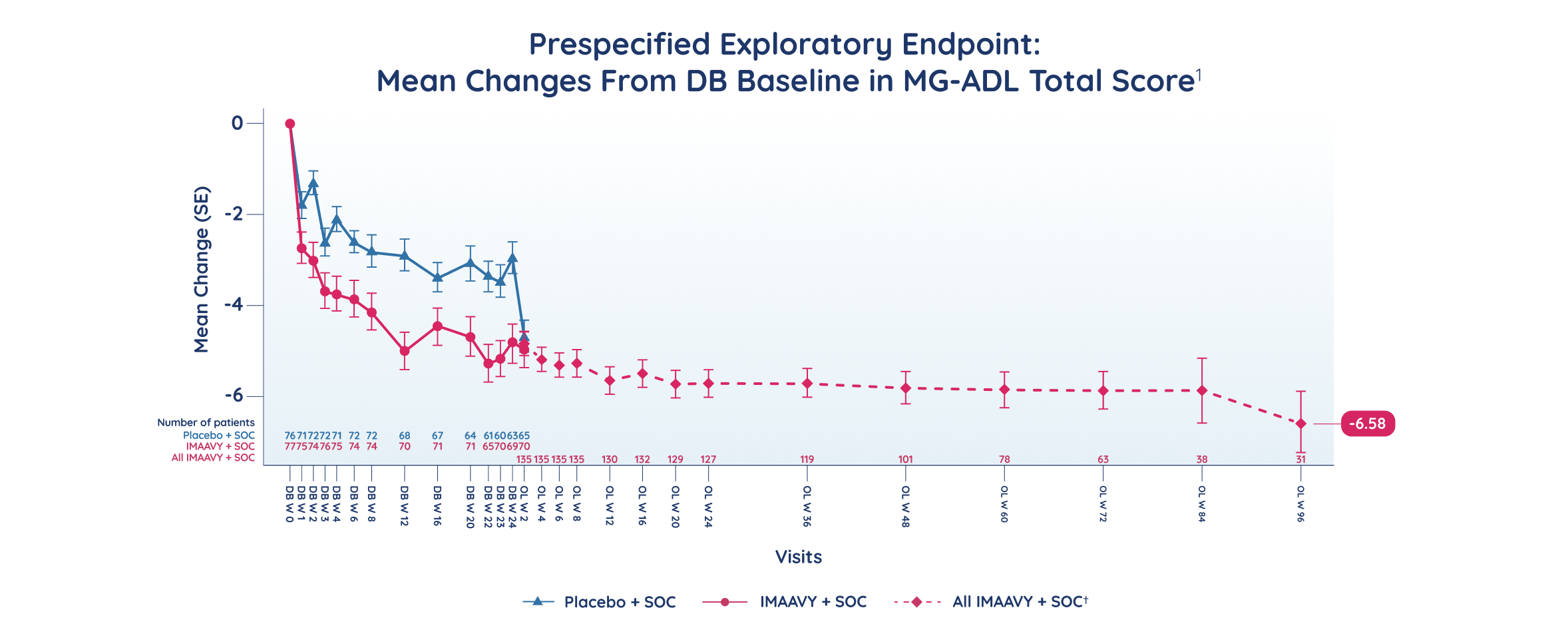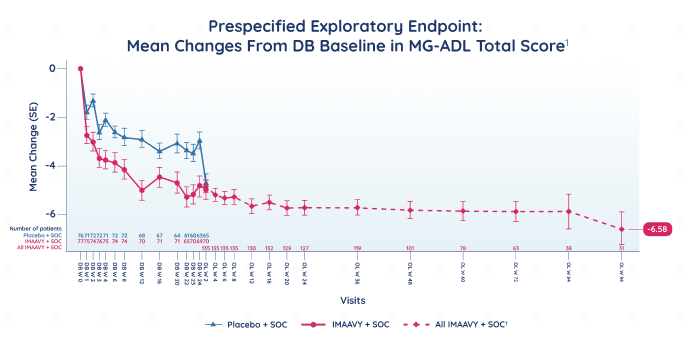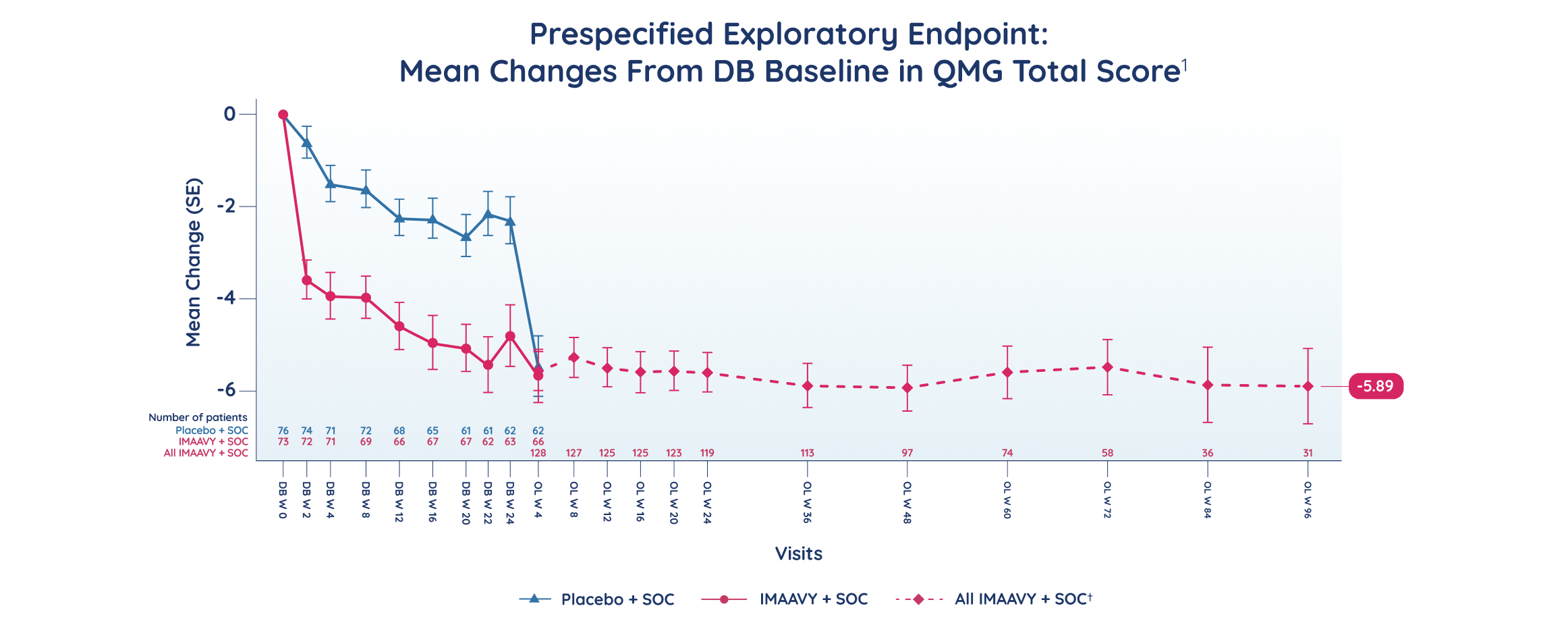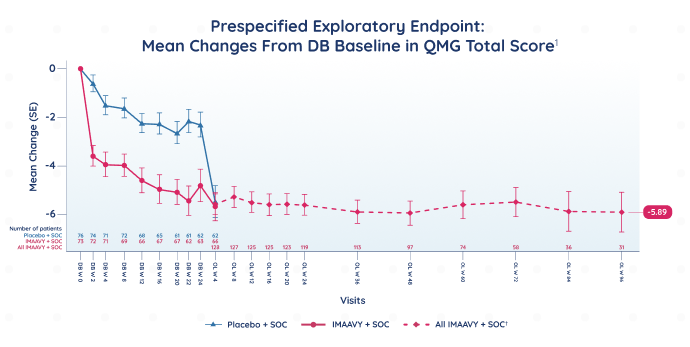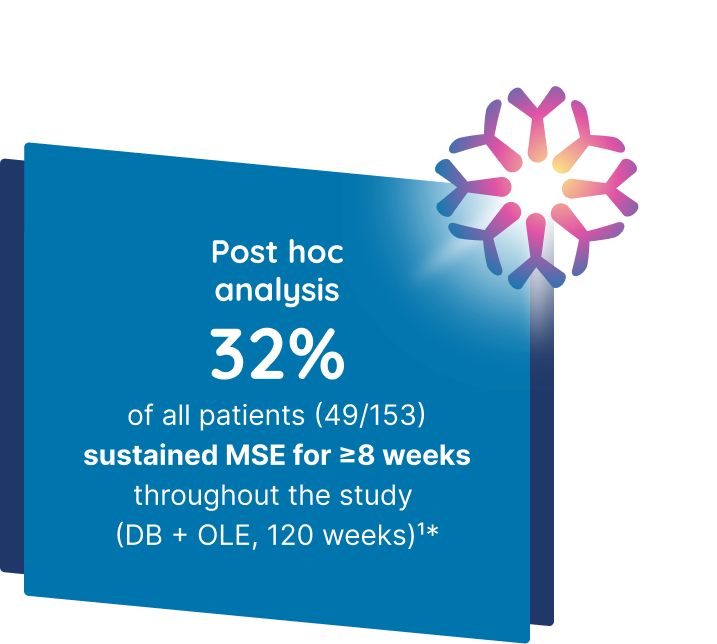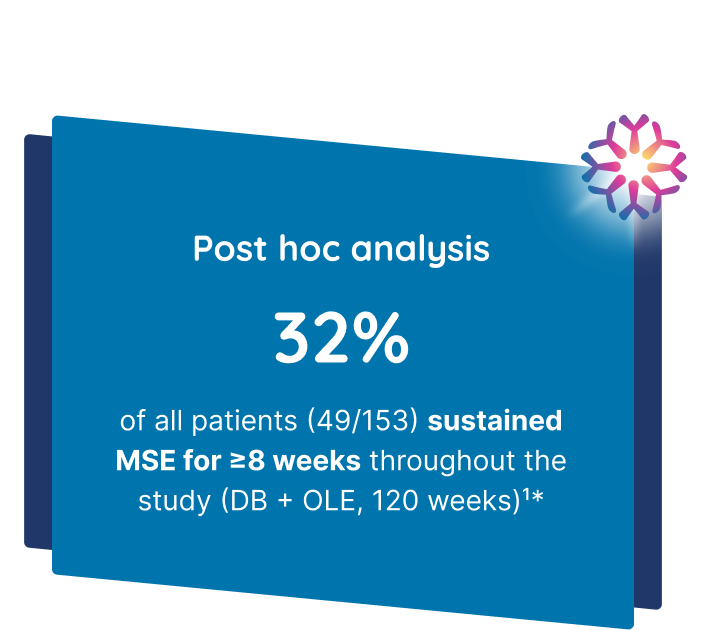

Participants who completed the Phase 3, double-blind VIVACITY-MG3 trial were eligible to continue in the OLE phase1
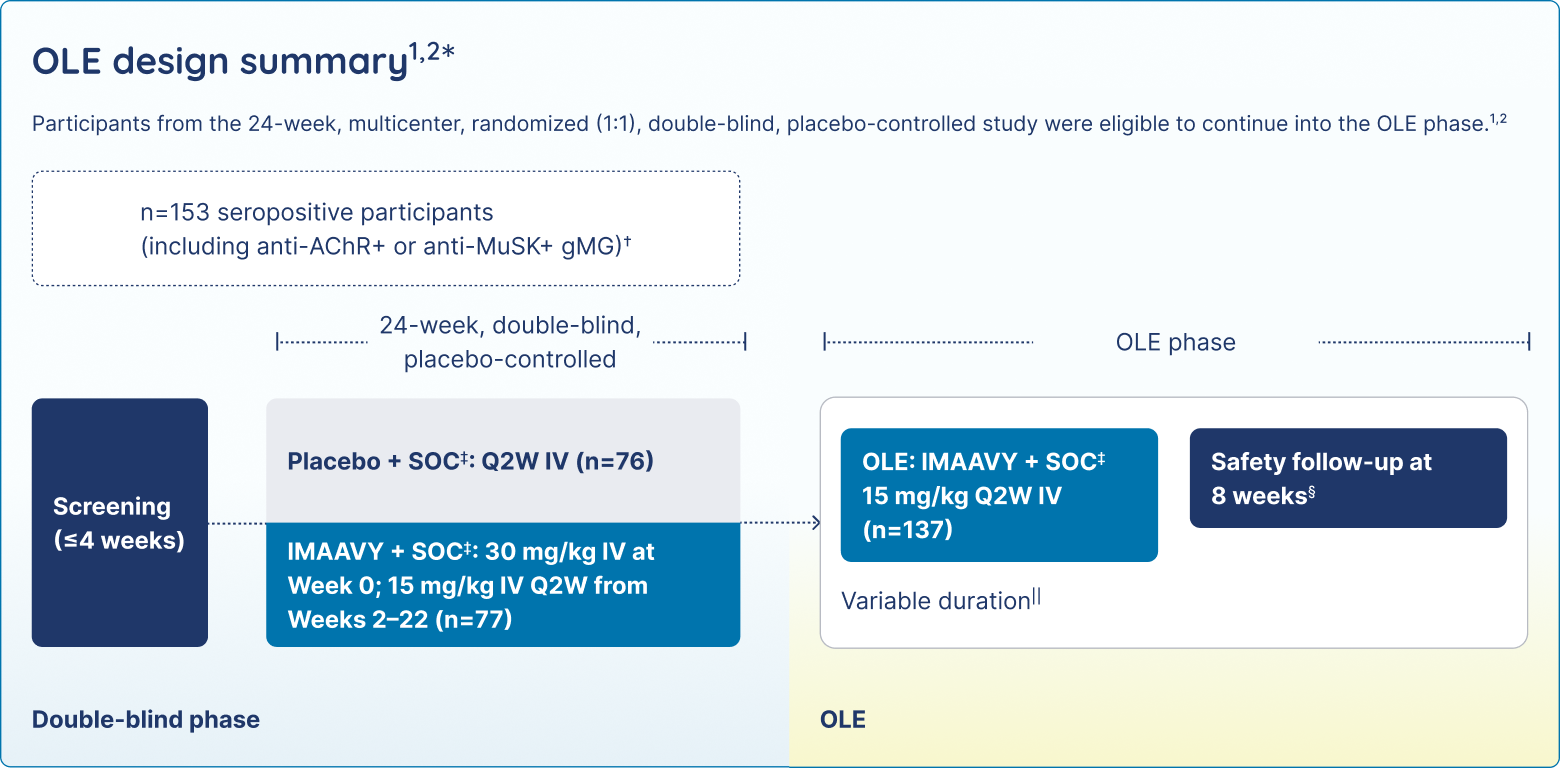
137 antibody-positive participants in the OLE phase received IMAAVY every 2 weeks.1,2
Eligible participants for the OLE were1,2:
- Patients who took IMAAVY + SOC in the pivotal trial and continued on IMAAVY in the OLE
- Patients who took placebo + SOC in the pivotal trial and started IMAAVY on Day 1 of the OLE
Tapering of SOC therapy in the OLE was allowed if patients’ gMG was stable in the prior 4 weeks as reflected by MG-ADL score and investigator discretion.1
‡SOC therapies included AChEIs, steroids, or NSISTs, taken together or separately. At pivotal trial double-blind baseline, in each group, 85% of patients received AChE inhibitors, 66% of patients received steroids, and 54% of patients received NSISTs at stable doses.3
All patients were observed for safety 1-hour post infusion for the first 3 IMAAVY infusions.3
*All participants enrolling in the OLE phase were to receive IMAAVY 15 mg/kg given every 2 weeks by IV infusion, starting on Day 1 of the OLE phase. Assessment done at the Week 24 visit of the double-blind, placebo-controlled phases served as baseline (first visit) of the OLE phase, and participants received their first infusion of open-label IMAAVY during the same visit after completion of the Week 24 visit assessments. There were 2 arms: patients who had taken IMAAVY in the Phase 3 trial and continued taking IMAAVY in the OLE study (n=88) and patients who had taken placebo in the VIVACITY-MG3 trial and switched to IMAAVY for the OLE phase (n=88).2,4
†This trial included patients with the 2 most common subtypes of gMG, AChR+ and MuSK+. Eighty-eight percent (n=134) of patients were positive for anti-AChR antibodies and 10% (n=16) were positive for anti-MuSK antibodies. These subtypes account for ~90% of all patients living with gMG.3,5
§Participants who withdraw or discontinue after receiving any amount of study intervention will be required to complete a safety follow-up visit.2,3
||For participants outside the EU, treatment with IMAAVY is to continue until 2 years after marketing authorization in a participant’s local country/
territory or until IMAAVY becomes available commercially or via other continued access program, whichever came first. EU participants will continue treatment until 192 weeks after the double-blind phase of the study has been completed.5
References: 1. Antozzi C, Vu T, Ramchandren S, et al. Long-term safety and efficacy of nipocalimab: approximately 2 years follow-up results from the open-label extension phase of Vivacity-MG3 study. Poster presented at: American Academy of Neurology (AAN) Annual Meeting; April 18–22, 2026; Chicago, IL. 2. Antozzi C, Vu T, Ramchandren S, et al. Supplement to: Safety and efficacy of nipocalimab in adults with generalised myasthenia gravis (Vivacity-MG3): a phase 3, randomised, double-blind, placebo-controlled study. Lancet Neurol. 2025;24(2):105–116. doi:10.1016/S14N4-4422(24)00498-8 3. IMAAVY [Prescribing Information]. Horsham, PA: Janssen Biotech, Inc. 4. Katzberg H, Ait-Tihyaty M, Turkoz I, et al. Safety profile of nipocalimab, a new neonatal fragment crystallizable receptor blocker in the phase 3 Vivacity study. Poster presented at: 15th Myasthenia Gravis Foundation of America (MGFA) International Conference 2025; May 13–15, 2025; The Hague, The Netherlands. 5. Antozzi C, Vu T, Ramchandren S, et al. Safety and efficacy of nipocalimab in adults with generalised myasthenia gravis (Vivacity-MG3): a phase 3, randomised, double-blind, placebo-controlled study. Lancet Neurol. 2025;24(2):105–116. doi:10.1016/S1474-4422(24)00498-8