

Man living life happily: tying his laces, working at his desk, socializing with companions

About gMG

FcRn sustains autoantibody concentration

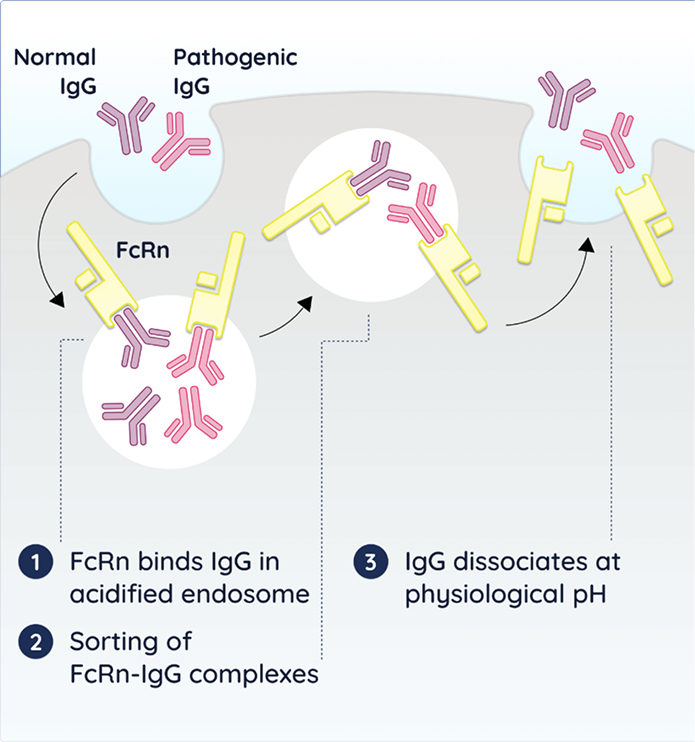
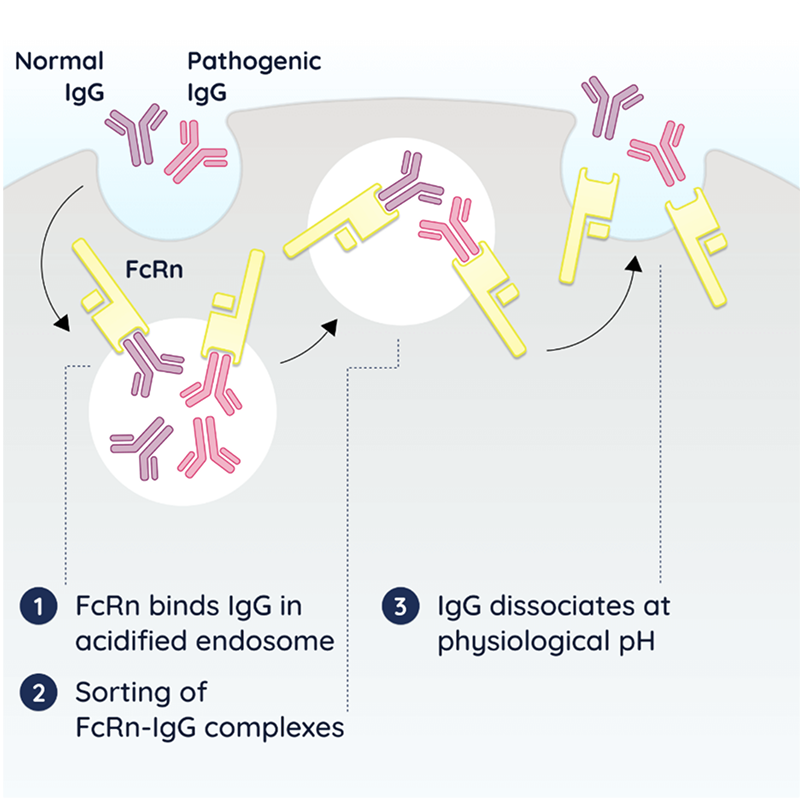
FcRn recycling pathway: FcRn binds IgG in acidified endosome, releases at physiological pHFcRn recycling pathway: FcRn binds IgG in acidified endosome, releases at physiological pH

FcRn is a protein that plays a crucial role in regulating IgG antibody levels in the body. By recycling IgG, FcRn helps maintain antibody levels in the bloodstream.1

However, in autoimmune diseases like gMG, this function can inadvertently sustain pathogenic antibodies that drive disease activity.1

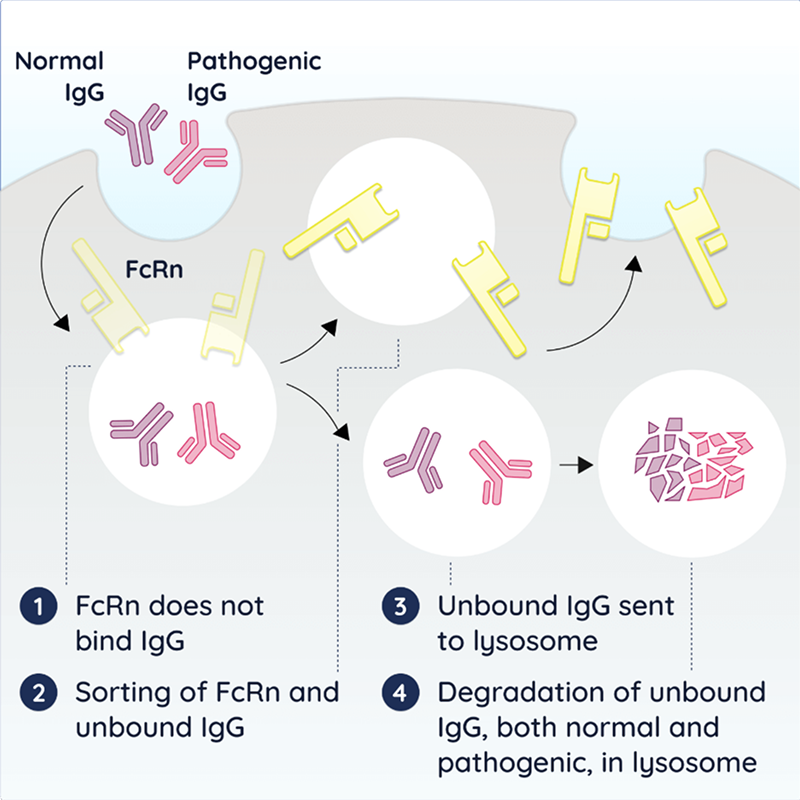
FcRn pathway: Unbound IgG, both normal and pathogenic, is sent to the lysosome for degradation, while FcRn is sorted separately

An FcRn blocker is a targeted therapy that disrupts the IgG recycling process. By blocking FcRn, this type of treatment reduces circulating IgG, specifically lowering IgG, including pathogenic antibodies that contribute to symptoms in gMG.1

FcRn=neonatal fragment crystallizable receptor;
IgG=immunoglobulin G.

gMG autoantibodies mistakenly target essential proteins on the postsynaptic membrane1

gMG subtypes vary based on the specific autoantibodies involved, influencing disease severity and response to treatment. IgG autoantibodies cause disrupted neuromuscular communications and result in muscle weakness, a primary symptom of gMG.2 Types of IgG antibodies in gMG can include:

  • Anti-acetylcholine receptor (AChR)
  • Anti-muscle-specific tyrosine kinase (MuSK)

IMAAVY® (nipocalimab-aahu) Transparent LogoIMAAVY® (nipocalimab-aahu) Transparent Logo
IMAAVY® (nipocalimab-aahu) Transparent Logo